Home / Articles
Rejuran Skin Booster Seoul – Results at PLANEW Clinic
Home / Articles
Rejuran Skin Booster Seoul – Results at PLANEW Clinic
American women are flying to Seoul specifically to sit in Dr. Daewoo Ko's chair at PLANEW Clinic — not because it is cheaper (though it is), but because the treatment they want simply does not exist at home. Rejuran skin booster Seoul has become one of the most searched non-surgical skin treatments among US patients, yet it remains entirely unavailable at American clinics, med spas, and dermatology offices due to FDA regulatory timelines that have nothing to do with its safety record.
If you have spent months watching Rejuran before and after transformations on Reddit and YouTube, priced out Korean skin clinics, and wondered whether the trip is actually worth it this guide was written for you. The challenge is not finding information about Rejuran; it is finding honest, specific, and medically grounded information written for an American patient who is genuinely considering traveling to Seoul for this skin booster treatment.
"As an aesthetic physician with more than 10 years of clinical experience and hundreds of Rejuran skin booster treatments performed annually, I approach every patient's skin as a unique clinical case not a template." — Dr. Daewoo Ko, Aesthetic Physician, PLANEW Clinic
Rejuran skin booster is a polynucleotide (PDRN) injectable derived from purified salmon DNA fragments. It belongs to a category of treatments known as skin regeneration therapies — distinct from fillers, toxins, and surface treatments — because its primary mechanism operates at the cellular level.
PDRN stands for polydeoxyribonucleotide. When injected into the dermis, PDRN activates A2A adenosine receptors in the skin, which triggers a cascade of regenerative activity: fibroblast proliferation increases, collagen and elastin synthesis begins, and the extracellular matrix — the structural scaffolding of healthy skin — starts to remodel itself.
It is important to understand how Rejuran differs from hyaluronic acid (HA) fillers and HA-based skin boosters. HA treatments add hydration or volume to tissue from the outside in. Rejuran does something fundamentally different: it provides the biological signal that prompts your own skin cells to repair, regenerate, and rebuild. Results build progressively over four to twelve weeks as the collagen remodeling process unfolds — and that timeline is a feature, not a limitation.
This polynucleotide skin booster has more than 15 years of clinical data supporting its safety and efficacy profile. For anyone researching PDRN injection skin treatments online, that depth of clinical history is meaningful.
This is the question every American patient asks first — and the answer deserves clarity.
Rejuran is not available in the United States because it has not completed the US clinical trial and regulatory submission process required by the FDA. That is the entire explanation. It is not unavailable because of safety concerns, adverse events, or questions about its efficacy. It is unavailable because the regulatory pipeline in the United States requires its own independent approval process, regardless of approvals granted elsewhere.
Rejuran is fully approved and widely used in South Korea under the MFDS (Ministry of Food and Drug Safety), across Europe, and throughout Asia. Korean MFDS approval and US FDA approval are parallel regulatory frameworks — both rigorous, both credible, and both operating on their own timelines. One approval does not automatically confer the other.
For US patients, this creates a clear situation: this Korean skin booster treatment is not accessible at home right now, and it is unknown when that will change. The skin booster is not available in the USA through any licensed medical provider, which means Seoul — and PLANEW Clinic specifically — represents the legitimate, medically supervised access point for American patients who want this treatment.
Rejuran works best for patients aged 25 to 50 who are dealing with skin texture concerns, fine lines, dehydration, dullness, or early collagen loss. The treatment does not require a specific level of skin aging — it is equally effective as a preventive measure for patients in their late twenties and as a regenerative intervention for patients in their forties and beyond.
A particularly strong candidate profile includes:
Thinning or crepey skin under the eyes
Fine lines forming around the jaw and outer eyes
Uneven skin texture or enlarged pores
Sun-damaged or dull skin that topical products have not resolved
Post-acne scarring with textural irregularities
General skin flatness or loss of luminosity
One detail worth addressing explicitly: Rejuran works across all Fitzpatrick skin types. PLANEW Clinic calibrates injection depth and treatment protocol on a per-patient basis, which means patients with deeper skin tones receive a treatment plan tailored to their specific skin biology — not a generic protocol designed for one skin type.
Contraindications include active skin infection in the treatment zone, pregnancy or breastfeeding, diagnosed autoimmune conditions, and confirmed allergy to salmon or fish-derived products. A physician consultation will identify any contraindications before treatment is scheduled.
Understanding why Rejuran produces the results it does requires understanding what it actually does to your skin at the cellular level. There are three phases to the biological process.
The first phase is anti-inflammatory activity. PDRN reduces the low-grade chronic inflammation that underlies most visible signs of skin aging — dullness, uneven texture, and accelerated fine line formation. This is why many patients notice their skin feels calmer and more settled within the first one to two weeks.
The second phase is fibroblast activation. Fibroblasts are the cells responsible for producing collagen and elastin. PDRN stimulates fibroblast proliferation — meaning there are more active cells generating structural proteins in the treated area. This collagen stimulation treatment effect is what differentiates Rejuran from surface-level hydration treatments.
The third phase is extracellular matrix (ECM) remodeling. The ECM is the structural framework that gives skin its firmness, elasticity, and density. PDRN injection skin treatment rebuilds and reorganizes this matrix over the weeks following treatment, which is why the full results of this skin regeneration treatment Korea patients rely on are not immediate — they develop over four to twelve weeks as the biology does its work.
The cumulative nature of Rejuran is also important. Each session builds on the previous one. Patients who complete a series of three sessions spaced two to four weeks apart experience significantly more comprehensive results than those who receive a single session — both in visible improvement and in how long the results last.
For US patients researching Korean skin rejuvenation, three treatments come up consistently: Rejuran, Juvelook Volume, and Skinvive. Here is a direct comparison:
Feature | Rejuran Skin Booster | Juvelook Volume | Skinvive |
|---|---|---|---|
Active Ingredient | PDRN (polynucleotide) | PDLLA microspheres + HA | HA (hyaluronic acid) |
Primary Effect | Skin regeneration, texture | Volumizing + collagen | Hydration, smoothness |
Mechanism | Cellular regeneration | Biostimulation + filling | Hydration |
Results Timeline | 4–12 weeks | 8–16 weeks | 2–4 weeks |
Ideal Patient | Fine lines, texture, glow | Volume loss, deep lines | Dryness, surface smoothness |
Sessions Needed | 1–3 | 2–3 | 1–2 |
Available in USA | No | No | Limited |
The table above illustrates meaningful differences in mechanism and indication. Skinvive delivers faster surface hydration through its skin hydration booster injection approach. Juvelook Volume addresses deeper structural concerns through a biostimulation mechanism. Rejuran works at the cellular regeneration level, producing a skin texture improvement treatment effect that builds over time.
For many patients at PLANEW Clinic, the right answer is not one treatment but a combination. The 1:1 consultation at PLANEW Clinic — where you can compare all three skin boosters with your treating physician — determines whether Rejuran alone is optimal or whether a combination protocol better serves your skin goals. Patients who receive both Rejuran and a complementary booster in the same visit often achieve results that neither treatment would produce independently.
For a deeper look at how Juvelook Volume works, including patient results and who it suits best, see the dedicated article on Juvelook Volume at PLANEW Clinic.
Before any injection takes place, PLANEW Clinic begins with a 3D skin analysis — a multi-spectral imaging process that goes substantially beyond what a standard US dermatology or med spa consultation provides.
The analysis maps skin hydration levels, melanin distribution, collagen density, pore size, and subsurface texture across the full treatment area. This is not a visual assessment. It is a data-driven clinical map that reveals what is happening beneath the surface of the skin, not only what is visible in the mirror.
"The 3D skin analysis is not a formality — it is a clinical map. It tells me exactly where the skin is losing collagen density, where hydration is deficient, and how to sequence the treatment for maximum effect." — Dr. Daewoo Ko, PLANEW Clinic
The analysis results directly inform every element of the treatment plan: injection depth, concentration, treatment zones, and combination protocol are all customized to the individual patient's scan. No two PLANEW Clinic patients receive an identical treatment plan — and this is the specific differentiator between PLANEW Clinic's model and the high-volume walk-in clinics that dominate parts of the Gangnam district.
The 1:1 consultation with the treating physician follows the scan. Patient history is reviewed, concerns are discussed, the proposed protocol is explained in full, and questions are answered before anything else happens. Pre-numbing cream is applied at this stage and takes 30 to 40 minutes to take full effect — time that is used productively for the consultation rather than simply waiting.
This is what non-surgical skin rejuvenation Seoul done properly actually looks like. PLANEW Clinic skin treatment is built on a foundation of personalized clinical planning, not standardized packages.
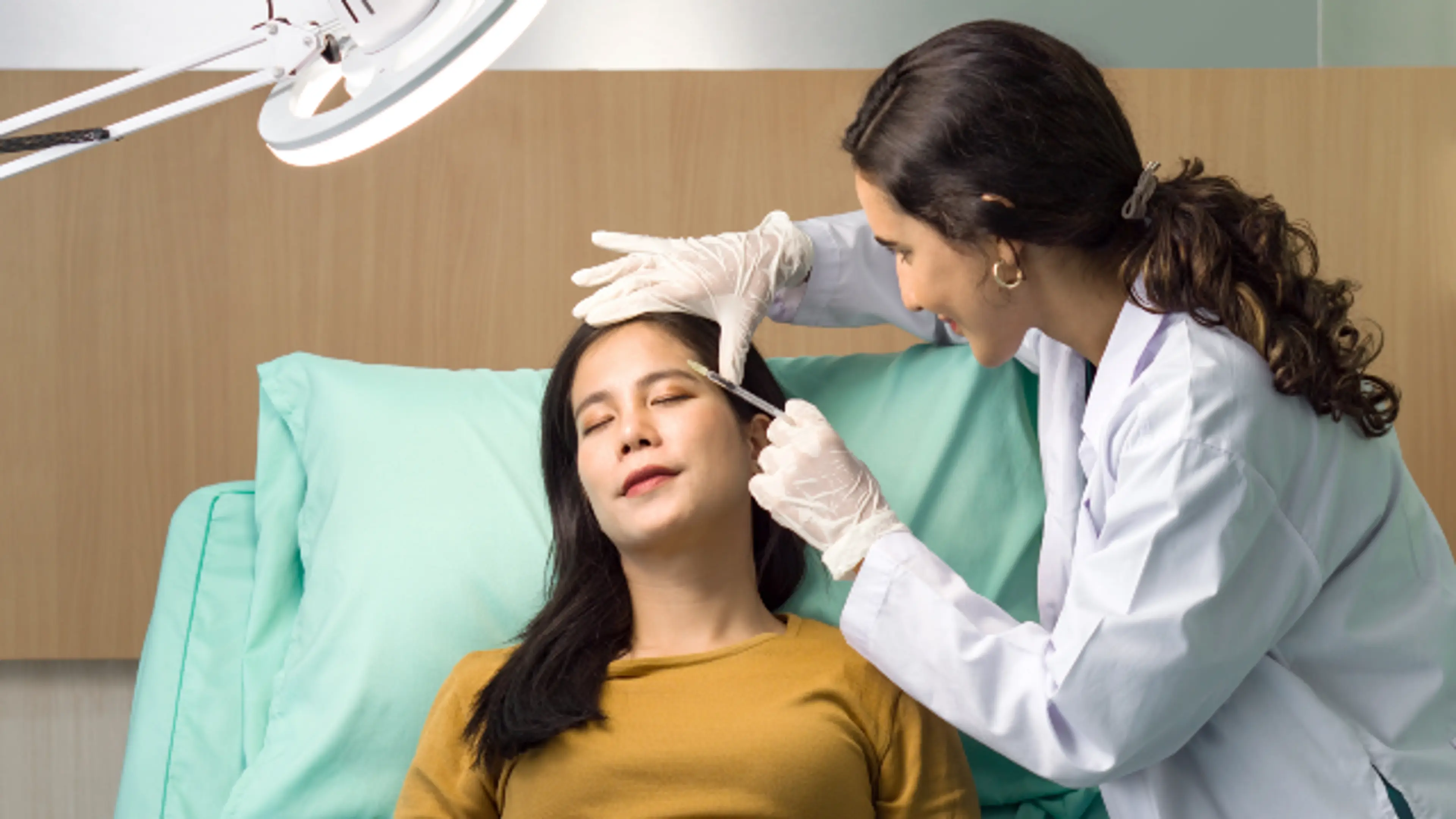
Once the numbing cream has taken effect and the treatment plan has been confirmed, the Rejuran session begins. The treatment involves a series of small intradermal injections using a fine-gauge needle, administered across the target treatment zones — full face, under-eyes, neck, or specific areas identified in the 3D analysis.
The procedure itself takes 20 to 40 minutes, depending on the treatment area. With numbing cream in place, most patients describe the sensation as mild pinching — present but manageable, and significantly less uncomfortable than the same treatment would feel without preparation.
PLANEW Clinic operates a private single-patient room model. You are not in a shared treatment space alongside other patients. The clinician's attention is entirely on your treatment from arrival to departure.
Immediately after the treatment, your skin will have mild redness resembling a light sunburn, and small injection dots may be visible for one to four hours. In most patients, there is no significant swelling or bruising. The appearance is temporary and resolves predictably within the same day.
For a visual overview of the full appointment flow — from 3D analysis through to aftercare briefing — refer to the step-by-step infographic: "Your Rejuran Treatment Timeline at PLANEW Clinic."
One of the most common questions from American patients planning a Seoul trip is whether they can maximize their time by combining Rejuran with other treatments. The answer is yes — with clear clinical logic guiding what is combined in a single session versus spread across multiple days.
Common and well-supported combination protocols at PLANEW Clinic include:
PLANEW Clinic's 1:1 planning model is specifically designed for patients visiting Seoul for a three to five day window. The skin booster treatment Seoul combination protocols here are built to maximize what is achievable within a realistic international visit. The Korean skin booster treatment options at PLANEW Clinic are structured so that your trip delivers the full benefit of multiple interventions, not just one.
Understanding what the recovery from Rejuran actually looks like is one of the most important factors in deciding whether this treatment fits your Seoul itinerary. The answer for most patients is better than expected.
Immediately after the treatment, you will have mild redness in the treated areas — comparable to a light sunburn — and small injection marks visible at the surface. In most patients, these marks are not distinguishable from routine skin redness and are not obvious to a casual observer.
Within four to twelve hours, redness typically resolves completely. Most PLANEW Clinic patients are comfortable going to dinner or exploring Seoul the same evening. Makeup can be applied from the following morning onward.
In the first 24 hours after your Rejuran skin booster Seoul treatment, you should avoid the following:
Strenuous exercise or any activity that significantly raises core body temperature
Sauna, steam rooms, or hot baths
Alcohol consumption
Direct sun exposure without SPF protection
Pressing, rubbing, or touching the treated area
Active skincare ingredients including retinol, AHA/BHA exfoliants, and vitamin C serum
None of these restrictions are difficult to observe during a Seoul evening. They do not prevent normal activity, restaurant visits, or gentle sightseeing.
In the two to three days following treatment, some patients notice mild tightness or sensitivity in the treated area. This is normal and part of the early healing process. By days five to seven, the majority of patients report that their skin feels unusually smooth, hydrated, and different from their pre-treatment baseline.
It is worth addressing one common recovery experience that occasionally surprises patients: micro-bumps at injection sites, known clinically as papules, may appear in the first 48 to 72 hours. These are small, resolve on their own without intervention, and are a normal part of the injection process — not a complication. They do not require treatment and should not cause concern.
The early "glow" that Rejuran patients often describe begins around days seven to ten, as the initial post-injection inflammation subsides and the regeneration process activates. This is not the full result — it is the opening signal that the biological process is underway.
The skincare protocol PLANEW Clinic recommends during recovery is intentionally simple: a gentle, non-irritating cleanser; a barrier-focused moisturizer; and SPF50 or higher every morning. For this fine line treatment Seoul patients are pursuing, protecting the investment with consistent sun protection during the recovery window is non-negotiable.
"The most common observation my patients share at their 2-week follow-up is that their skin feels different — denser, more hydrated, more alive. The visible changes in texture and tone follow over the next 6 to 10 weeks." — Dr. Daewoo Ko, PLANEW Clinic
This skin hydration booster injection effect — the sense that skin is more internally supported — is one of the earliest and most consistent patient observations following Rejuran treatment.
This is the question that determines whether Rejuran fits a realistic Seoul itinerary, and the answer is straightforward: yes. Most PLANEW Clinic patients fly home the day after their Rejuran session, and some fly the same day, with no clinical contraindication.
Cabin air during a long-haul flight is dry and dehydrating, which means in-flight skincare matters. PLANEW Clinic recommends:
Applying a sheet mask during the first two to three hours of the flight
Using a barrier serum on top of moisturizer before boarding
Drinking water consistently throughout the flight — aim for water every 60 minutes
Avoiding touching or pressing your face during the flight
If flying back to New York or another US city within 24 hours of treatment, the only visible concern is redness — which is typically resolved within six to twelve hours. Injection marks are not visible to a casual observer after the first evening. The airport experience the following morning is indistinguishable from any other travel day for the vast majority of patients.
For optimal results and maximum peace of mind, the ideal timing is to schedule your Rejuran treatment 24 to 48 hours before your departure flight. This allows any injection marks to resolve fully and lets the initial recovery settle before the dehydrating conditions of long-haul travel.
For a complete reference, see the recovery timeline below. Additional detail on flying after combination treatments is available in the dedicated guide: flying after skin treatments.
Timeframe | Skin Status | Activities Permitted | Restrictions |
|---|---|---|---|
Hours 1–6 | Mild redness, injection marks | Rest, gentle movement | No makeup, no sun |
Hours 6–24 | Redness fading | Dinner, light tourism | No gym, no alcohol |
Days 2–3 | Minor sensitivity | Normal activities, makeup OK | No retinol/AHA |
Days 5–7 | Smoothness beginning | Full activity resumed | SPF essential |
Weeks 2–4 | Glow phase begins | All activities | Maintain SPF |
Weeks 4–12 | Progressive collagen results | Normal skincare resumed | Maintenance SPF |
Results are the reason American patients make the decision to travel. Understanding what real Rejuran skin booster before after photos show — and what they mean in clinical terms — is the most important context for setting honest expectations.
The before and after documentation at PLANEW Clinic is captured under consistent photography standards: same lighting, same angle, same distance, same facial positioning at baseline and at each follow-up. This consistency matters because it allows genuine comparison rather than photographer-dependent variation.
The patient cases shown in PLANEW Clinic's documentation represent a range of ages (27 to 52), skin tones spanning Fitzpatrick Types I through V, and primary concerns including skin texture, dullness, fine lines, and under-eye thinning. Rejuran skin booster before after photos from diverse skin types confirm that this treatment produces measurable improvement across the full skin tone spectrum.
One concern that comes up consistently among American patients researching this treatment is the fear of looking overdone or obviously treated. It is important to address this directly: Rejuran does not change the shape of the face. It does not add volume. It does not produce an artificial or frozen appearance. The result is skin that looks healthier, more luminous, and more youthful — not skin that announces a procedure. The goal at PLANEW Clinic is always a result that looks like an improved version of you, not a different person.
The timeline of Rejuran results is one of the most frequently misunderstood aspects of this treatment, and understanding it correctly is essential to having accurate expectations.
Here is what the progression actually looks like for most patients:
This collagen stimulation treatment produces results that last. For a single session, most patients maintain their results for six to twelve months. For a series of three sessions, results typically last twelve to eighteen months. Patients who invest in the full series experience compounding improvements that go beyond what a single session can achieve.
Rejuran skin booster cost Seoul is a legitimate factor in the decision-making process, and transparent pricing is something PLANEW Clinic provides. All USD figures below are estimates based on current exchange rates and should be confirmed at time of consultation, as currency fluctuations apply.
Treatment | PLANEW Clinic Seoul (USD Est.) | New York Equivalent (USD) | Savings |
|---|---|---|---|
Rejuran Skin Booster (1 session, full face) | $300–$500 | $800–$1,400 | 55–70% |
Rejuran Skin Booster (series of 3) | $750–$1,200 | $2,200–$3,800 | 55–68% |
Rejuran + Skin Botox (combination) | $450–$700 | $1,200–$2,000 | 60–65% |
Rejuran + HIFU Lifting (combination) | $900–$1,400 | $3,500–$6,000 | 70–75% |
Consultation | Included | $150–$300 separately | 100% |
Numbing cream | Included | $30–$75 separately | 100% |
Two points deserve emphasis. First, the consultation fee and numbing cream are included in PLANEW Clinic's treatment pricing. There are no hidden add-ons. Second, aftercare product recommendations are provided at no obligation — patients are not pressured to purchase in-clinic products, and the post-treatment protocol is simple enough to source from standard pharmacy or beauty retailers.
For a complete comparison of skin booster treatment Seoul pricing across multiple treatments, the full PLANEW Clinic cost guide provides a broader reference.
The Rejuran skin booster cost Seoul figures above reflect pricing that is simply not available in the United States, where Rejuran is not offered at any price point through licensed medical providers. The skin booster treatment Seoul pricing advantage exists alongside a clinical quality advantage — these are not discounted treatments delivered at lower standards.
For American patients, the financial calculation requires looking at the total trip investment, not just the treatment cost in isolation.
Here is an honest framework for planning the full budget:
Total estimated investment for a Rejuran treatment trip to Seoul, including flights and accommodation: approximately $1,500 to $3,500 all-in.
For comparison, equivalent treatments at a reputable New York aesthetic medicine clinic — if Rejuran were available — would cost $3,000 to $7,000 or more, and that assumes you could access the same 3D skin analysis, 1:1 treatment planning model, and physician expertise that PLANEW Clinic provides.
Beyond the financial calculation, the frame worth holding is that Seoul is a world-class city. The trip is not purely a medical expense — it is also a meaningful travel experience. Patients who visit PLANEW Clinic frequently plan a three to five day Seoul itinerary around their treatment, using the non-treatment days to explore a city with remarkable food, culture, and beauty infrastructure.
For patients concerned about exchange rate fluctuations, PLANEW Clinic recommends confirming USD equivalent pricing at time of booking and building a 10 to 15 percent buffer into the total budget.
Medical tourism Seoul dermatology has expanded significantly over the past decade as international patients recognize that the glass skin Seoul clinic experience — at places like PLANEW Clinic — offers clinical quality and personalization that is not easily replicated at home.
Dr. Daewoo Ko is the lead aesthetic physician at PLANEW Clinic, with more than 10 years of clinical experience in aesthetic medicine and dermatology. He performs more than 600 aesthetic procedures annually across PLANEW Clinic's full treatment portfolio, with a specific specialization in non-surgical facial rejuvenation and advanced skin treatments.
His clinical approach is evidence-based: every treatment plan is built on objective skin analysis data, patient history, and clearly defined goals — not templates or standardized packages. His commitment is to natural-looking results achieved through personalized protocol design, which means the plan he creates for your skin reflects your skin specifically.
His experience with Rejuran extends across hundreds of treatments per year, including advanced combination protocols that pair Rejuran with HIFU lifting, thread lifting, skin Botox, and Exosome Therapy. This multi-modal expertise is what allows PLANEW Clinic to offer genuinely comprehensive Seoul trip protocols rather than isolated single treatments.
The broader clinical team at PLANEW Clinic includes Dr. Seungyeon Yeo, a skin booster and injectable specialist, and Dr. Jeonghyun Kang, who specializes in laser and skin tightening treatments. For patients pursuing combination protocols that include laser or HIFU alongside Rejuran, this specialized team structure means the right physician is managing each element of the treatment plan.
The private room model at PLANEW Clinic is not a marketing claim — it is a clinical structure. Every patient receives a private treatment room for their full appointment. There is no shared treatment space, no waiting alongside other patients, and no divided clinician attention during the session.
Every treatment plan begins with the 3D skin analysis — technology-driven personalization rather than visual assessment only. The data from the analysis directly informs the injection protocol, which means two patients presenting with similar surface concerns may receive meaningfully different treatment plans based on what the imaging reveals beneath the surface.
The appointment-only model at PLANEW Clinic differs from the high-volume walk-in structure of many Gangnam district clinics. Dedicated clinician-to-patient time is a design choice, not an accident of capacity.
For American patients visiting on a three to five day window, PLANEW Clinic's treatment sequencing expertise is particularly valuable. The clinic is experienced at building complete multi-treatment Seoul trip protocols — combining Rejuran with HIFU, skin Botox, Exosome Therapy, or Juvelook Volume across a realistic travel itinerary — in a way that maximizes results within the available time.
PLANEW Clinic's international patient infrastructure is specifically designed for the US patient experience. Key elements include:
The first step for every international patient is a free virtual pre-consultation via video call. This is available before you book any travel.
During the consultation, you will discuss your current skin concerns and treatment goals, receive a proposed protocol from a physician or patient coordinator, have any questions answered in real time, and understand exactly what to expect from your Seoul visit before committing to the trip.
The consultation can be booked via WhatsApp, Instagram DM, email, or the website contact form. PLANEW Clinic recommends booking the virtual consultation four to eight weeks before your planned Seoul travel, which provides adequate time for itinerary planning and pre-treatment preparation.
Following the virtual consultation, you will receive a written treatment plan summary that outlines the proposed protocol, session structure, and any pre-treatment preparation instructions. The PLANEW Clinic patient coordinator will work with you to align appointment timing with your travel dates.
A pre-treatment preparation guide will be sent via email — this covers what to stop using on your skin before treatment, how to prepare for the appointment, and what to bring.
Phone: +8225255575
Address: Seocho-gu, Seoul, South Korea
Hours: The clinic operates from Monday to Friday between 10:30 AM and 8:30 PM, offering extended evening hours for patient convenience. On Saturdays, it is open from 10:00 AM to 4:30 PM, while the clinic remains closed on Sundays.
Yes. The safety record of Rejuran skin booster Seoul spans more than 15 years of clinical use across South Korea, Europe, and Asia, with a well-documented profile and no major safety concerns identified across that clinical history. The absence of FDA approval reflects the regulatory timeline difference between the US and Korean systems — both the MFDS and the FDA are rigorous regulatory bodies, and approval by one does not automatically apply to the other. This Korean skin booster treatment is among the most established non-surgical skin regeneration options available anywhere in the world.
A single session produces visible improvement for most patients, particularly in hydration and early texture refinement. However, to experience the full Rejuran 3 month results skin texture transformation — including pore size reduction, fine line softening, and measurable collagen density improvement — a series of three sessions spaced two to four weeks apart is the standard clinical recommendation. This approach maximizes the collagen stimulation treatment effect and extends the duration of results from six to twelve months (single session) to twelve to eighteen months (series of three).
Yes. Rejuran and HIFU Lifting are a well-supported combination at PLANEW Clinic, targeting different tissue depths and biological mechanisms. The skin booster treatment Seoul protocol sequences HIFU first — it provides structural lifting and tightening at the deep tissue level — followed by Rejuran, which addresses the dermal regeneration layer. This combination is a strong choice for patients seeking both structural lift and skin quality improvement in a single Seoul visit. Non-surgical skin rejuvenation Seoul through this combined approach can be planned within a three to five day itinerary.
Yes. Rejuran is a polynucleotide skin booster that works by activating biological regeneration at the cellular level — a mechanism that is effective and appropriate across all Fitzpatrick skin types (I through VI). Unlike some laser and energy-based treatments that carry higher risk of pigmentation change in darker skin tones, PDRN injection skin treatment does not target melanin and does not carry the same pigmentation risks. PLANEW Clinic calibrates injection depth and protocol per patient, which means patients with deeper skin tones receive a treatment plan designed specifically for their skin biology.
Results from a single session typically last six to twelve months, depending on skin type, age, lifestyle factors, and post-treatment sun protection. Patients who complete a series of three sessions experience cumulative improvement that generally lasts twelve to eighteen months. Rejuran skin booster before after photos at PLANEW Clinic document the progression from baseline through to the three-month peak, giving an accurate visual reference for the duration and nature of results. Annual or biannual maintenance sessions are common among patients who want to sustain their Rejuran skin booster Seoul results long-term.
Yes. Flying home the day after your Rejuran skin booster Seoul session is clinically acceptable and common among PLANEW Clinic international patients. The key considerations for the flight are managing cabin dehydration: use a hydrating sheet mask during the first few hours of the flight, apply a barrier serum before boarding, drink water consistently throughout the journey, and avoid touching your face. The skin booster treatment Seoul recovery timeline shows that redness typically resolves within six to twelve hours of treatment — meaning by departure the following day, the treated area looks normal to any observer.
These are two distinct Korean skin booster treatment options with different active ingredients, mechanisms, and indications. Rejuran uses PDRN (polynucleotide) to trigger cellular regeneration, collagen synthesis, and structural ECM repair — it is a skin texture improvement treatment that works from within the biology of the skin. Juvelook Volume uses PDLLA microspheres combined with hyaluronic acid to address volume loss and deeper structural concerns while also stimulating collagen. The right choice depends on your primary skin concern. Many PLANEW Clinic patients benefit from both in a combination protocol, which the 1:1 consultation is designed to determine.
Rejuran skin booster Seoul requires minimal downtime for most patients. Redness and injection marks resolve within four to twelve hours. You can go to dinner or do light tourism the same evening. Makeup is permitted from the following morning. The only meaningful activity restrictions in the first 24 hours are avoiding strenuous exercise, sauna, alcohol, and active skincare ingredients. By days two to three, sensitivity is mild and normal activities are fully permitted. For a fine line treatment Seoul itinerary, a single afternoon appointment followed by three to four days of normal sightseeing is entirely realistic.
Yes. Free virtual pre-consultations via video call are available to all international patients. This allows you to discuss your skin concerns, receive a proposed treatment protocol, and ask questions before committing to travel. The PLANEW Clinic skin treatment planning process begins at this virtual consultation stage, which means your in-person Seoul appointment is focused on treatment rather than discovery. For medical tourism Seoul dermatology planning, PLANEW Clinic recommends booking this consultation four to eight weeks before your planned travel date.
You do not need to purchase any aftercare products at the clinic. The post-treatment skincare protocol recommended by PLANEW Clinic is intentionally straightforward: a gentle cleanser, a barrier-focused moisturizer, and SPF50 or higher. Most patients already own suitable versions of these or can source them at a pharmacy or beauty retailer in Seoul before departure. There is no pressure to purchase in-clinic products. The skin regeneration treatment Korea approach at PLANEW Clinic prioritizes clinical outcomes over product sales. The one non-negotiable is consistent SPF use during the recovery period — this protects the investment you have made in the glass skin Seoul clinic treatment and prevents UV damage from interfering with the collagen remodeling process.
Neither. Rejuran skin booster Seoul is well-suited for patients from their mid-twenties through their early fifties, and in some cases beyond. At 25 to 30, it functions as a preventive regenerative treatment that maintains collagen density before significant loss occurs. At 35 to 50, it is an active regenerative intervention that addresses established fine lines, texture changes, and collagen depletion. The polynucleotide skin booster mechanism is effective across this full age range. A physician consultation at PLANEW Clinic will confirm whether your specific skin profile and goals align well with Rejuran or whether a different or combined treatment better serves your needs.
In the seven days before your Rejuran skin booster Seoul appointment, discontinue the use of retinol, retinoids, AHA and BHA exfoliants, and vitamin C serums. These ingredients increase skin sensitivity and can heighten the likelihood of irritation or redness following injection. In the 24 to 48 hours before your appointment, avoid any new skincare products you have not used before. On the day of treatment, arrive with clean skin and no active skincare ingredients applied. PLANEW Clinic skin treatment preparation guidance will be sent in writing after your virtual consultation, so you will have a complete checklist before you arrive in Seoul.
Rejuran skin booster is a PDRN-based skin regeneration treatment with more than 15 years of clinical track record in Korea. Its absence from the US market is a regulatory pipeline issue — not a reflection of any safety concern — and for American patients who want access to this treatment, Seoul under expert medical supervision is the clear path.
PLANEW Clinic's 1:1 personalized treatment model, 3D skin analysis foundation, and combination protocol expertise deliver a genuinely different clinical experience from high-volume alternatives elsewhere in Seoul or from US-based med spa equivalents. Results develop progressively over three months, with before and after photography at that milestone consistently showing measurable improvement in skin texture, hydration, and fine line reduction. The total investment for a Rejuran treatment trip to Seoul including flights and accommodation is frequently less than the cost of a single equivalent treatment session in New York, for a treatment that is not available at any New York clinic regardless of price.
Dr. Daewoo Ko and the PLANEW Clinic team have guided hundreds of international patients through exactly this journey — from first inquiry to three-month results — with the clinical rigor and personal attention that makes the trip worth making.